
The Full Range of Non-Surgical Treatments Available Through Lipo Freeze
How each treatment works, the concerns it addresses, who it suits, what a session involves and how results develop - explained in full, without hype.
How the Treatment Range Is Organised
The treatments described here fall into two families. The first addresses the appearance and structure of the body and skin reducing localised fat, toning muscle, tightening tissue, remodelling collagen and removing benign blemishes. The second addresses pelvic floor function, an area of health that quietly shapes daily confidence for many men and women. Both are delivered without incisions and without general anaesthesia.
The first holds fat freezing, fat dissolving injections, body toning, the HIFU non-surgical facelift, advanced RF microneedling, the Signature Skin Lift and CryoPen cryotherapy. The second holds the core incontinence treatment and the four focused applications built upon it. Vaginal tightening sits between them, addressing concerns as much about comfort and function as appearance.
Matching a treatment to a person is rarely a matter of picking from a menu. Two people may describe the same softening jawline and need different approaches: structural descent calls for something quite different from crepey surface texture. Establishing which is present is why every treatment offered through Lipo Freeze begins with a consultation.
Consultation and Assessment Come First
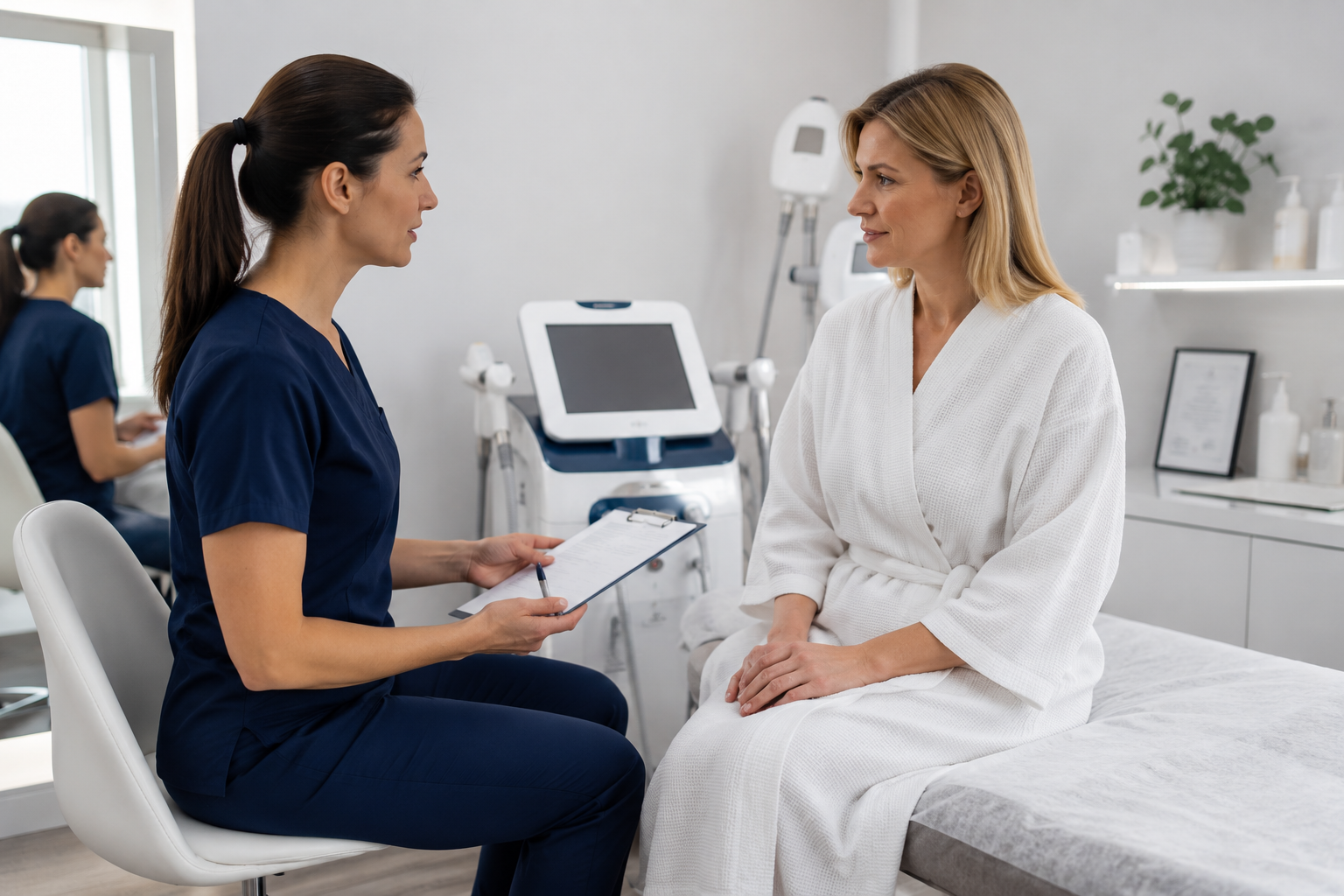
At Lipo Freeze, a consultation is a clinical screening step, not a formality. It establishes whether the concern you describe is one the available technology can address, whether your medical history permits the treatment considered, and what a realistic outcome would look like.
The assessment covers general health, medication, previous aesthetic procedures, implanted devices, pregnancy or breastfeeding, and any skin condition or infection in the area. None of these questions is incidental: metal implants and coils matter for electromagnetic treatments; pacemakers for radiofrequency; anticoagulants for injectables; cold-related conditions for cryolipolysis; keloid scarring for cryotherapy.
The physical assessment examines skin quality and thickness, the amount and distribution of subcutaneous fat, the degree of laxity and the muscle tone beneath. Cryolipolysis needs sufficient fat to draw into an applicator; skin tightening addresses laxity but removes no volume; muscle stimulation builds tone but does not treat the skin envelope.
Finally, expectations are set. None of these treatments is a weight-loss intervention and none produces a surgical degree of change. Where a goal is better served by another route, saying so is part of the job a principle discussed on the reasons to choose us page and under results.
Fat Freezing Treatment (Cryolipolysis)
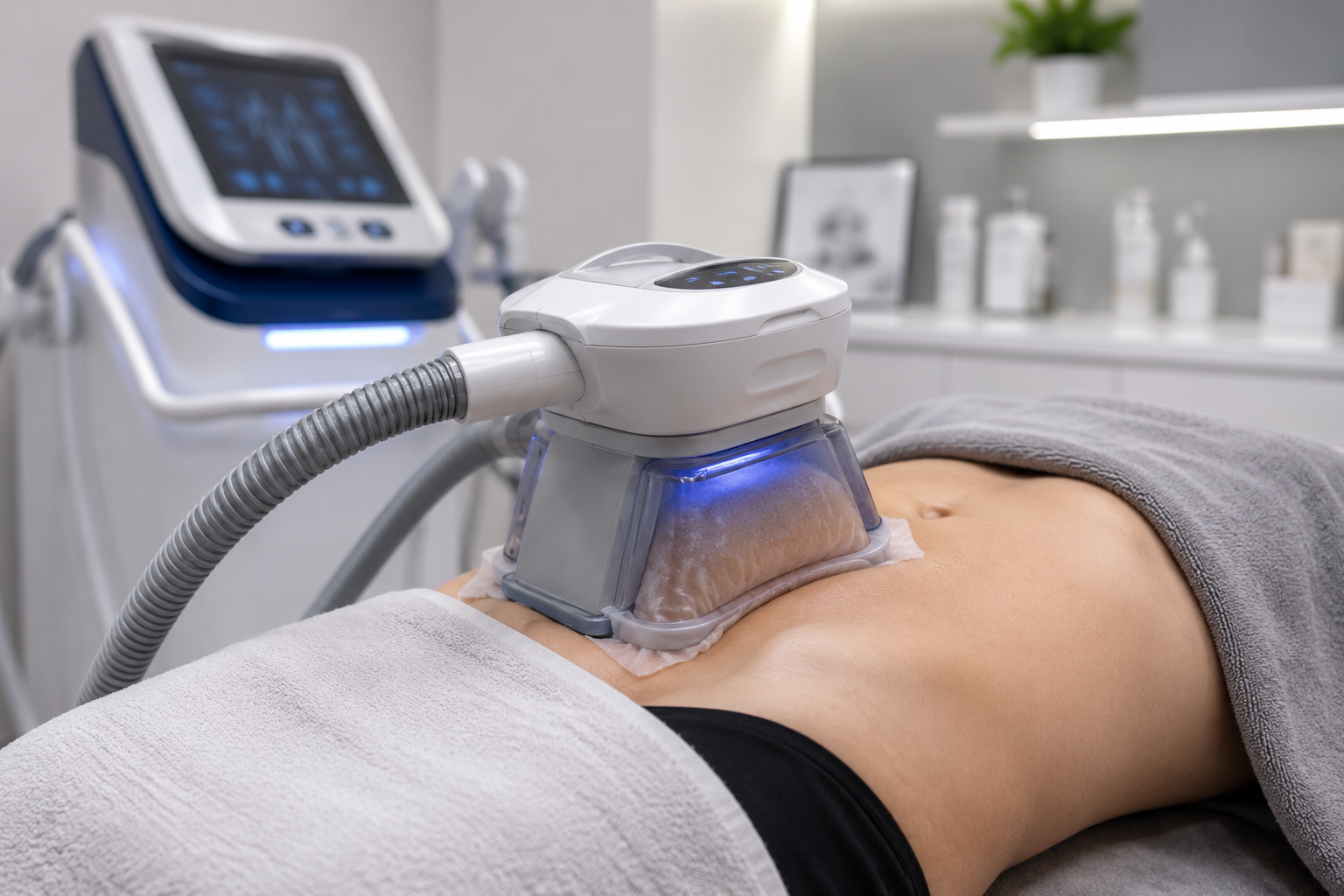
Cryolipolysis reduces a localised pocket of subcutaneous fat through controlled cooling, exploiting the fact that fat cells are more sensitive to cold than the skin, muscle and nerve tissue around them. A protective gel pad shields the skin while a cooling applicator draws the tissue into its cup by suction and holds it at a set temperature.
The cooled fat cells crystallise and undergo apoptosis a natural, controlled form of cell deat and the lymphatic system clears them over the following weeks. Because the cells are removed rather than shrunk, the reduction is permanent provided weight stays broadly stable.
Areas, Suitability and Exclusions
The treatment targets discrete, pinchable deposits: the stomach and abdomen upper, lower or full love handles and flanks, inner and outer thighs, upper arms, upper and lower back, back rolls and the chin. It suits someone at a stable weight with an area that has resisted their usual efforts, and is not a weight-loss treatment. It is unsuitable in pregnancy or breastfeeding and for anyone with Raynaud's phenomenon, cold urticaria or cryoglobulinemia; a hernia near the site, excessively loose skin or too little fat also rule it out. Where someone is significantly overweight, a weight-loss route is better.
The Session, Results and Aftercare
A session runs roughly thirty-five to sixty minutes. The opening minutes bring intense cold with a tugging, pressured sensation that subsides as the area numbs. There is no downtime: work, exercise and driving are possible the same day. Tingling, aching or tenderness commonly lingers from a few days to a week, and redness, bruising, swelling and numbness may occur and settle unaided. Rarely, paradoxical adipose hyperplasia, pigmentation change or cold injury may follow, the last extremely infrequent with correct protocol.
Visible change generally begins at three to four weeks, with the optimal result around eight to twelve weeks and elimination continuing for four to six months. One session often suffices. On the day, avoid lotions and oils on the area, wear loose clothing and arrive well hydrated. The equipment is FDA-cleared and CE-marked.
Fat Dissolving Injections Treatment
Where cryolipolysis works from outside the skin, fat dissolving injections work within the fat layer itself. A solution based on deoxycholic acid a substance the body already uses to break down dietary fat is introduced into the deposit, disrupting the membranes of fat cells so they break down and are cleared through the lymphatic system over the following weeks.
Treatment proceeds through six stages: consultation; planning, in which the practitioner maps the deposit; treatment, with the solution injected through small cannulas or needles; a reaction and healing phase in which swelling, redness and bruising are expected; gradual clearance of the cells by the lymphatic system; and a follow-up.
Areas and Suitability
This approach suits smaller, sculptural areas where precision matters more than volume the chin and double chin, jowls, abdomen, love handles and flanks, inner and outer thighs, upper arms, knees, small fat pads, and the upper back or bra strap area. Because it is placed exactly where needed, it reaches contours a cooling applicator cannot. It is not appropriate for people with diabetes mellitus, liver or kidney problems, an active skin condition in the area, or anyone taking anticoagulant medication such as warfarin, and it is not a weight-loss solution.
Sessions, Timelines and Aftercare
Most people require two to four sessions, with the overall cost depending on the treatment area and number of sessions required. You can find further information about treatment costs and course options on the Lipo Freeze 2U Aqualyx Prices page.
Body Toning Treatment With HIFEM
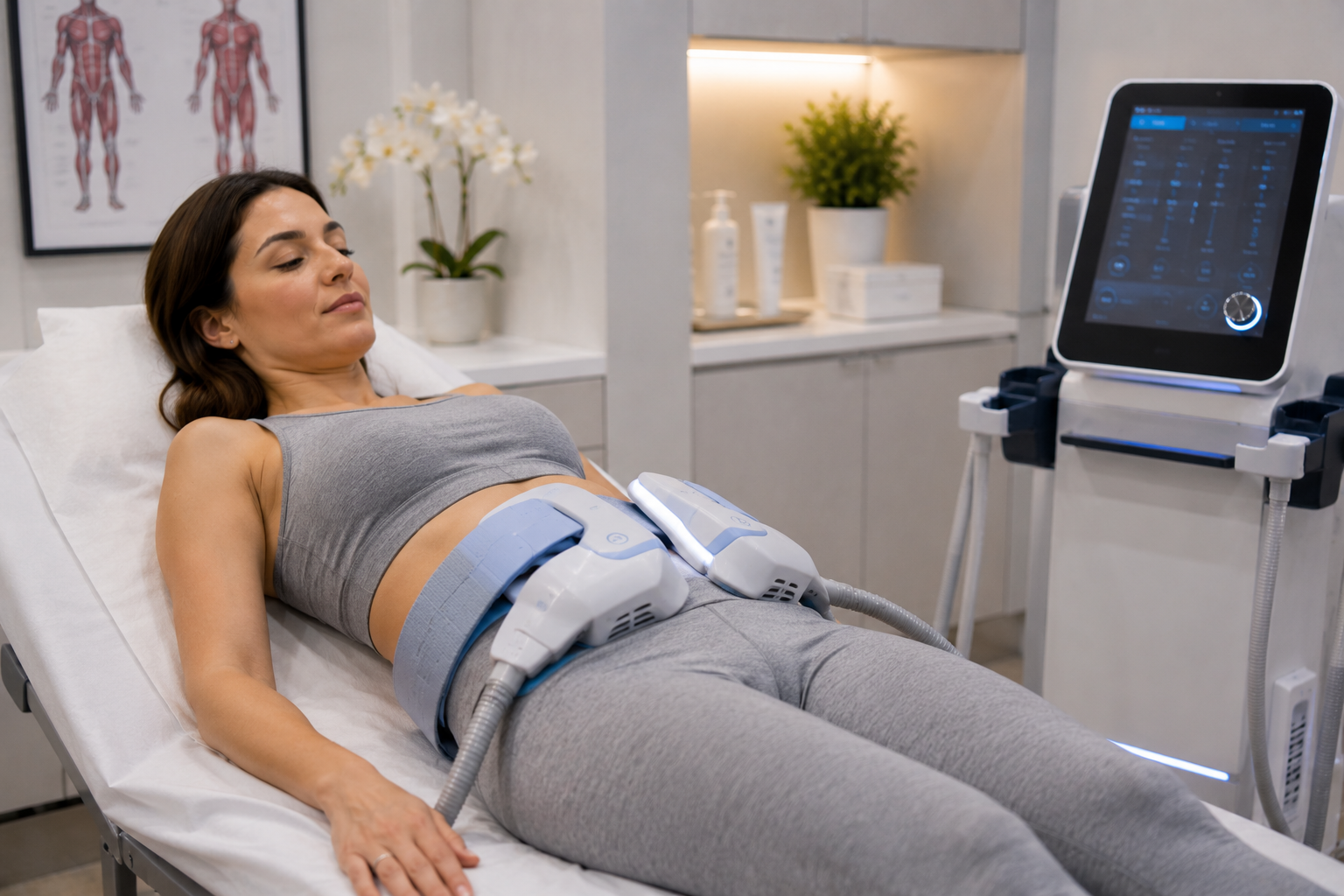
Body toning uses high-intensity focused electromagnetic energy, or HIFEM, to induce supramaximal muscle contractions, deeper than the nervous system can produce voluntarily. A thirty-minute session generates some twenty thousand contractions in the targeted muscle group, and that adaptation also affects the overlying fat. Figures associated with the technology describe up to a nineteen per cent reduction in fat and a sixteen per cent increase in muscle mass; these are upper figures rather than guarantees.
Areas and Exclusions
The principal areas are the abdomen, buttocks, hips, arms, thighs and calves, with treatment also applied to the neck, chin, back and chest including the male chest — as well as to cellulite. Beyond appearance, it helps diastasis recti, the abdominal muscle separation that often follows pregnancy, and supports recovery after injury. Because the mechanism is electromagnetic, the exclusions are specific: metal implants, an intrauterine device or coil, pregnancy or breastfeeding, bleeding disorders, cardiac conditions, epilepsy, active malignancy, hernia, active soft tissue injury, and being under eighteen.
Protocol, Results and Aftercare
A minimum of four to six sessions is recommended, spaced at least two days apart so the muscle recovers. Results become visible within around three weeks, with muscle gains apparent at two to four weeks and fat reduction developing over roughly three months. Outcomes typically last six to twelve months, after which periodic maintenance sustains them. There is no downtime and normal activity resumes immediately, and the result is best supported by reasonable activity and stable weight. Arrangements for courses are set out on the prices page.
HIFU Non-Surgical Facelift Treatment
The HIFU non-surgical facelift delivers focused ultrasound energy beneath the skin, to depths no topical product can reach. The energy converts to heat at defined points, and that controlled heating signals the body to produce new collagen. Crucially, it reaches the SMAS layer the same structural layer a surgeon addresses during a conventional facelift. There are no needles and no incisions, mild redness afterwards is possible and short-lived, and there is no downtime.
Areas and Who It May Suit
On the face and neck, HIFU is used to lift the brow and forehead, soften fine lines and wrinkles, define the jawline and reduce jowls, tighten the neck and chin, and smooth the decolletage. It is also applied to the body across the stomach, thighs, hips and chest, where laxity rather than volume is the concern. It generally suits people aged thirty and above with early to moderate ageing and realistic expectations, and is appropriate across all skin types and tones. Where laxity is advanced, a non-surgical approach will improve but not transform.
Session, Timeline and Aftercare
A HIFU session with Lipo Freeze lasts from thirty minutes to about an hour depending on the zones treated. Many notice an immediate improvement in tone and texture, with fuller results developing over three to four weeks as collagen regenerates, and a longer window of two to three months also commonly described. Results generally last six to eighteen months, with top-ups after six to twelve. The technology is FDA-approved and cost-effective compared with surgery. Aftercare is minimal: handle the skin gently, keep it moisturised and protect it from strong sun.
Advanced RF Microneedling and Skin Remodelling
Advanced RF microneedling, delivered with Morpheus8 technology, combines two mechanisms that work better together than either alone. Fractional microneedling creates controlled micro-channels in the skin, while radiofrequency emitted from the needles themselves heats tissue at depth. The result is a controlled thermal injury the body answers by remodelling, laying down new collagen and elastin over the following weeks and months.
The sequence is consistent: a medical-grade numbing cream is applied, the handpiece delivers ultra-fine needles into the skin, and radiofrequency is emitted from those needles to heat deeper tissue. Depths reach up to four millimetres on the face and further on the body, allowing the technology to influence not only the dermis but the subdermal fat, which gives it a contouring capability alongside its effect on skin quality.
Concerns Treated and Exclusions
It is used for fine lines and wrinkles, enlarged pores, acne scarring, stretch marks, uneven texture and laxity, as well as subdermal fat remodelling, and is considered safe for all skin types. Radiofrequency means it is unsuitable for anyone with a pacemaker or other electronic implant, and it is inappropriate in pregnancy or breastfeeding, after recent aesthetic treatment in the same area, or where there is active infection or skin disease.
Recovery, Results and Aftercare
Redness, swelling and pinpoint marks are usual for one to five days, with normal activities resuming within a few days. Post-inflammatory hyperpigmentation is possible, and bruising, crusting or faint grid-marking can occur but are rare. Noticeable change appears within a few weeks, with full results at eight to twelve weeks. A course of three to four treatments four to six weeks apart is typical, and results commonly last several months to a year or more. If you are considering treatment, the Lipo Freeze 2U Morpheus8 Prices page provides further information about the cost of individual treatments and treatment courses.
The Signature Skin Lift
The Signature Skin Lift is the most advanced non-surgical skin tightening treatment available through Lipo Freeze, and it exists because the two preceding technologies solve different halves of one problem. HIFU reaches deep and lifts structure; RF microneedling works nearer the surface and improves the skin itself.
The treatment runs in two phases. The first applies HIFU for deep structural lifting, including at the SMAS layer, re-establishing support where descent has occurred. The second applies advanced RF microneedling to tighten the surface, refine texture and improve firmness in the skin overlying that newly supported structure. The logic is architectural: lift the foundation first, then resurface what sits on top of it.
Concerns, Areas and Suitability
It is directed at mild to moderate laxity, a sagging jawline and jowls, loss of facial definition, loose skin after weight loss, fine lines and wrinkles, crepey texture, an ageing neck and decolletage, reduced elasticity, acne scarring and enlarged pores. Facial zones include the forehead, brows, crow's feet, cheeks, nasolabial folds, jawline, jowls, chin, neck and decolletage; body areas include the abdomen, upper arms, knees, thighs, buttocks, flanks and hands. It suits someone whose concern spans both structure and surface. It is not recommended in pregnancy or breastfeeding, with certain medical conditions, active infection, or an electronic implant.
Timeline, Recovery and Aftercare
An initial tightening is often apparent immediately. The optimal result develops at six to twelve weeks, with continued improvement across three to six months, and outcomes commonly lasting twelve to eighteen months or longer. Many achieve excellent results from a single treatment while others benefit from a short course. Downtime is minimal, with temporary redness, swelling or mild sensitivity for a few days, and aftercare follows the microneedling pattern. Outcomes are discussed further under results.
CryoPen Cryotherapy Treatment
CryoPen cryotherapy, offered throughout the Lipo Freeze range, removes benign skin blemishes using a highly focused jet of nitrous oxide. The device never touches the skin, and the jet is fine enough to destroy the target lesion while leaving healthy skin immediately around it undamaged — a precision that matters most on the face and other visible areas. The lesions it is used for are:
- Actinic keratosis
- Age spots
- Benign moles
- Cherry angioma
- Dermatofibroma
- Milia
- Seborrhoeic keratosis
- Skin tags
- Sun damage
- Viral verrucae
- Warts
These are ordinary and usually harmless findings, but they affect how someone feels about their appearance and, in the case of a verruca or snagging skin tag, cause daily nuisance.
The Session, Healing and Suitability
Each lesion takes five to thirty seconds to treat, and an appointment usually runs to ten or fifteen minutes with no downtime. Afterwards it darkens and scabs, or blisters slightly, before falling away. Healing takes one to four weeks depending on the lesion and its location, and a follow-up after four weeks is often recommended, since some lesions benefit from a second application.
Redness, mild blistering and scabbing are expected parts of the process rather than complications, and temporary lightening or darkening can occur. The treatment is generally safe across skin types when performed correctly, but is unsuitable for people with certain circulatory issues, uncontrolled diabetes or a tendency to keloid scarring. Aftercare is simple: let the scab separate naturally, keep the area clean and dry, and protect it from sun. The technology is FDA-approved.
Vaginal Tightening Treatment
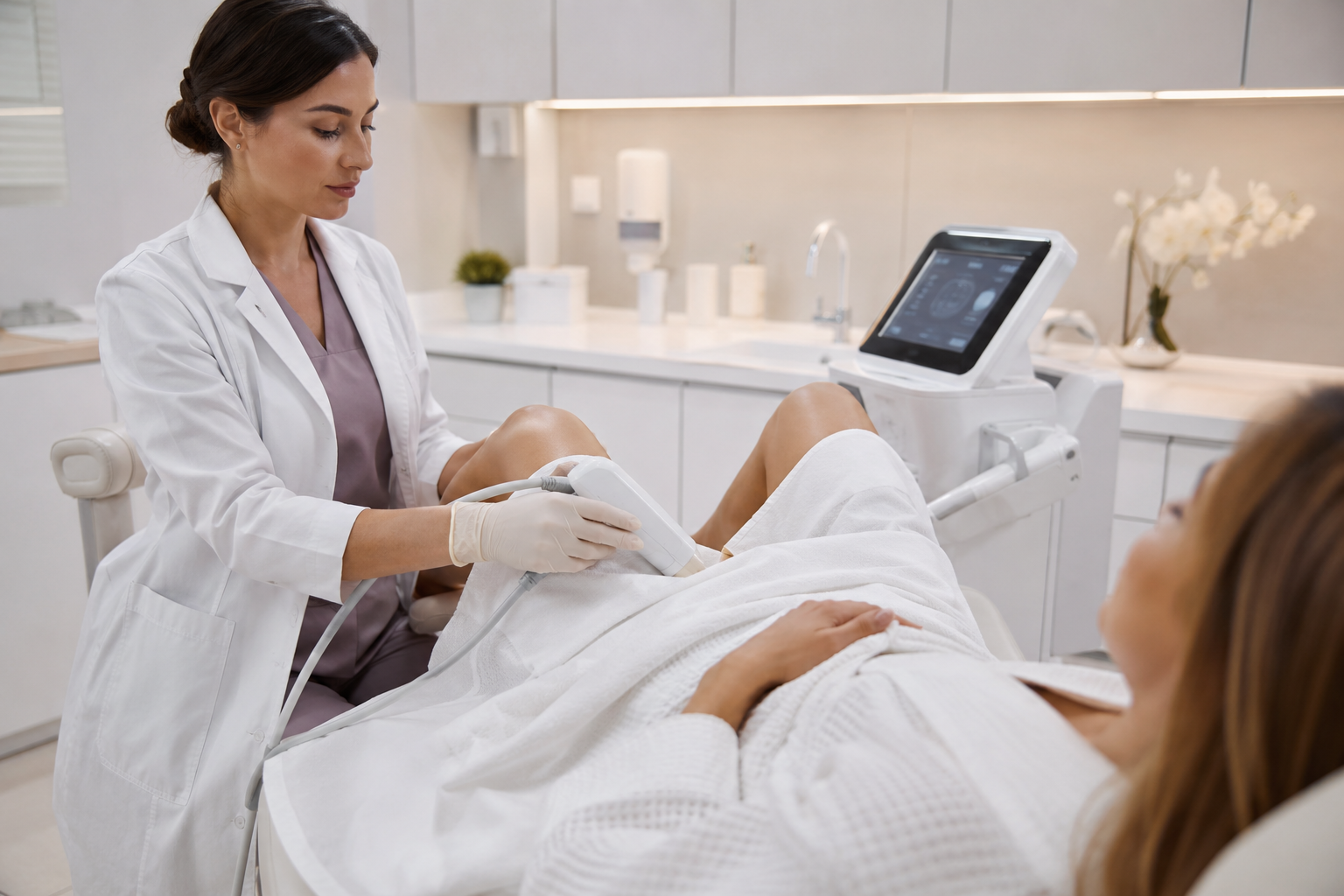
Vaginal tightening applies HIFU technology internally, using focused ultrasound to heat tissue in a controlled way and stimulate collagen and elastin. The concerns it addresses are common, seldom discussed and often endured far longer than necessary. Consultations at Lipo Freeze are confidential, consultants are female only, and home visits are available on request arrangements that exist because privacy often decides whether someone seeks help at all.
A treatment takes around thirty minutes: consultation, then a topical numbing cream, then delivery of focused energy by a HIFU wand, which activates the collagen response. Downtime is minimal, with slight soreness or mild swelling possible for a few days, and improvements in tightness, lubrication and the feel of the pelvic floor develop over the following weeks.
Who It Is For, and How Results Develop
It is directed at laxity, often following childbirth; minor stress incontinence; dryness associated with lower oestrogen; sensitivity or pain during intercourse; and loss of collagen and tone through age or menopause. Reported benefits include increased tightness and elasticity, improved sexual satisfaction, reduced dryness, some alleviation of incontinence and relief from painful intercourse. Many women benefit from three treatments four to six weeks apart, with initial improvement often noticed within a few weeks and collagen building over months. Results last from several months to more than a year, and annual maintenance is sometimes recommended. Afterwards, refrain from sexual activity for twenty-four to forty-eight hours or as directed, and stay hydrated. Results are not permanent.
An Honest Note on the Evidence
A 2023 review of HIFU found that studies show promising results when treatment is performed by trained professionals, but that outcomes and risks vary from person to person. Separately, the FDA has warned that energy-based devices used for vaginal rejuvenation can pose serious risks and should be approached with caution. Both statements are reproduced here deliberately: anyone considering this treatment deserves to weigh the reported benefits against the published cautions.
Incontinence Treatment and the Pelvic Floor
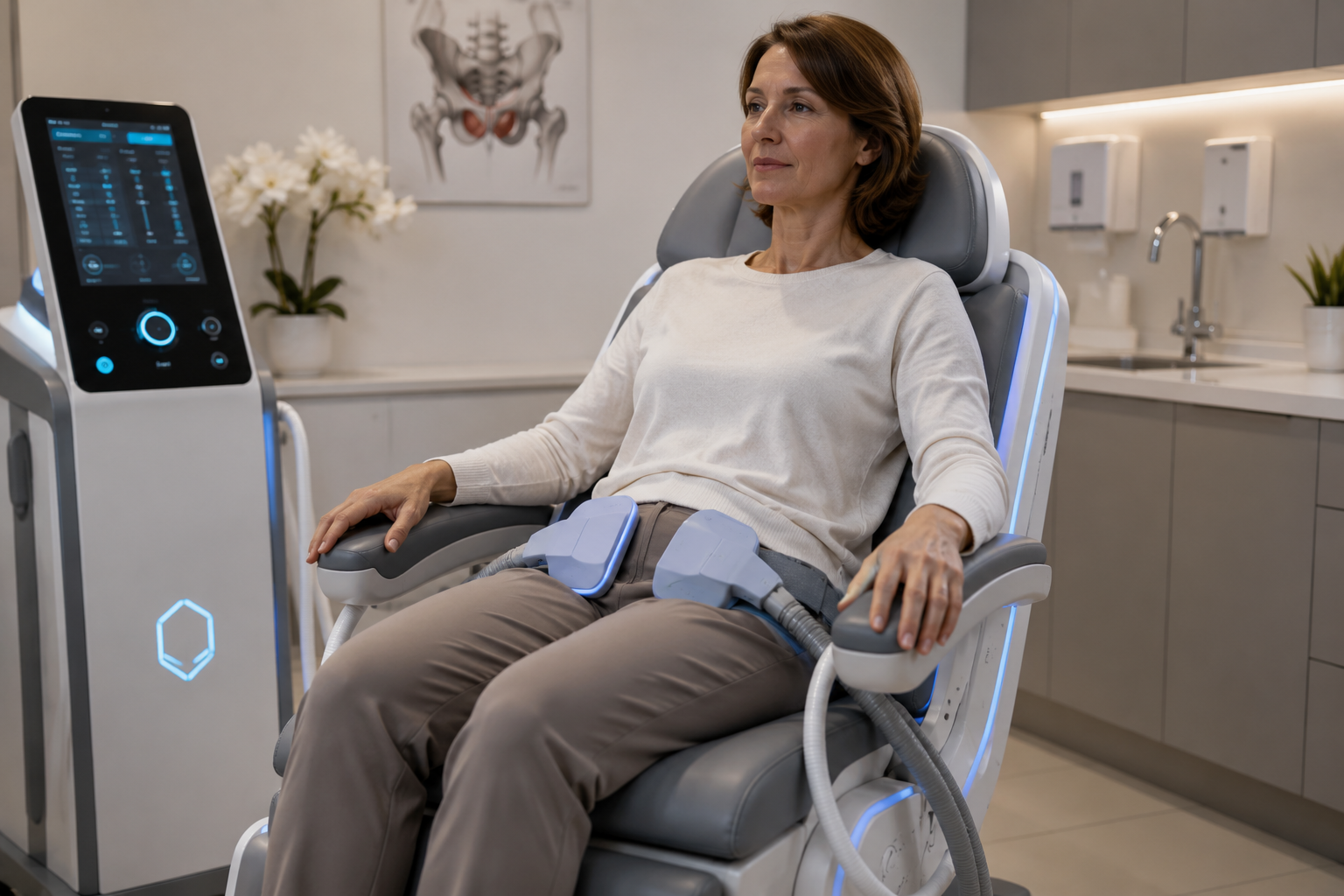
The pelvic floor is a sling of muscle supporting the bladder and bowel, and when it weakens, control suffers. This treatment uses HIFEM technology to target those deep muscles directly, simulating Kegel exercises on a scale no voluntary effort can match one thirty-minute session is described as equivalent to thousands of them. The person treated remains fully clothed and seated, removing much of the awkwardness that discourages people from seeking help.
The same treatment is applied to stress incontinence, overactive bladder, faecal incontinence and erectile dysfunction, because all four relate to the same muscle group. For women it is used for postpartum pelvic concerns, menopause-related incontinence, childbirth-related pelvic floor problems, pelvic tightening and toning, and bowel or urinary problems. The NHS notes that pelvic organ prolapse is sometimes discovered only during tests carried out for other reasons, such as cervical screening. For men, reported benefits include a stronger pelvic floor, reduced urinary incontinence including that related to an enlarged prostate, help with impotence and premature ejaculation, increased penile rigidity and better ejaculation control.
Course, Timeline and Practicalities
A course of six to eight treatments is recommended, typically six sessions delivered as two weekly across three weeks. In extreme cases, maintenance of one session every three to twelve months may be advised. Benefits are often felt in as few as two or three treatments, visible improvement frequently appears within around three weeks, and results can last for years. Preparation amounts to loose clothing and adequate fluid intake; there is no downtime. The treatment is painless, and has been described as extreme pelvic floor exercise without the discomfort.
What the Evidence Does and Does Not Support
A study notes that powered muscle stimulators are marketed for muscle toning and aesthetic benefit, but that claims about eliminating incontinence, and about a single session being equivalent to eleven thousand pelvic floor tenses, are not supported by clinical evidence. A recent review found that current evidence does not show a significant difference in continence following vaginal laser treatment compared with placebo. The NHS position is that pelvic floor muscle training, such as Kegel exercises, is a widely used non-surgical option for urinary incontinence. Anyone considering treatment through Lipo Freeze should understand both what is claimed and what remains unproven.
Four Focused Pelvic Floor Services
Four services sit alongside the core incontinence treatment, sharing a technology and a treatment chair but existing separately because each condition is experienced quite differently.
Stress Incontinence Treatment
Stress incontinence is leakage that occurs when pressure is placed on the bladder coughing, sneezing, laughing, lifting or exercising. It is strongly associated with childbirth and menopause, and is among the most common reasons people first look for help. Because the issue is a pelvic floor that cannot resist a sudden rise in abdominal pressure, strengthening that muscle group addresses the mechanism directly.
Treatment for Overactive Bladder
An overactive bladder presents differently: a sudden, urgent need to pass urine, often frequently and at night, sometimes with leakage before a toilet is reached. That pattern shapes daily life in ways easy to underestimate, from planning journeys around facilities to disturbed sleep. Strengthening the pelvic floor supports better control and can reduce urgent episodes. If you would like to understand how this treatment is approached, see the Lipo Freeze 2U Overactive Bladder Treatment page for further information.
Faecal Incontinence Treatment
Faecal incontinence is the least discussed of the four and often the most isolating. It may follow childbirth, surgery, or age-related weakening of the muscles that maintain bowel control. The approach is identical — targeted electromagnetic stimulation of the deep pelvic floor while the person remains clothed and seated and that discretion matters particularly here. Any change in bowel habit should be assessed medically.
Erectile Dysfunction Treatment
In men, pelvic floor strength contributes to erectile function, and the same HIFEM approach is applied for that reason. Reported benefits include help with impotence, increased penile rigidity, better ejaculation control and help with premature ejaculation, alongside a stronger pelvic floor and reduced urinary incontinence. Sessions are painless, require no undressing and involve no downtime. Erectile dysfunction can have cardiovascular and other medical causes, so a conversation with a GP is a sensible parallel step. Further detail appears on the contact page.
How Treatments Are Combined Into a Plan
Few concerns have a single cause, so treatments are often sequenced rather than chosen in isolation, each factor addressed with the technology best suited to it.
The abdomen is the clearest example: where there is both a fat deposit and a weak or separated muscle wall beneath, fat freezing addresses the fat layer while body toning strengthens the muscle. The same reasoning underlies the Signature Skin Lift, where structural descent and poor surface quality coexist. Fat dissolving injections refine small contours a cooling applicator cannot reach, while vaginal tightening and pelvic floor treatment approach overlapping concerns from different directions. CryoPen sits apart, since removing a blemish has no bearing on anything else.
Spacing matters as much as selection. Body toning needs at least two days between sessions. RF microneedling courses run at four to six week intervals, and recent aesthetic treatment in the same area is itself a contraindication, so overlapping zones cannot simply be stacked. Fat freezing results take weeks to declare themselves. The wider approach is described on the home page.
Home Visits and Clinic Treatment
Treatment through Lipo Freeze can take place at a clinic or in your own home, and home visits are provided at no additional cost. Coverage extends across England, Scotland and Wales, delivered by a team with more than ten years of industry experience.
The clinical standard does not change with the setting. The same professional equipment is used, all of it FDA-approved or CE-marked, and the same protocols and screening apply. What changes is convenience and privacy. For pelvic floor work, vaginal tightening and other intimate concerns, being treated at home removes a real barrier.
The home service exists for people whose circumstances make attending a clinic difficult: a busy parent with limited mobility, someone caring for a dependent with additional needs, or anyone with a demanding schedule. Most treatments take no longer than around thirty minutes and involve no downtime, and consultation, treatment and aftercare guidance take place in the same visit. Locations covered are set out on the choose us page.
Safety, Contraindications and Screening
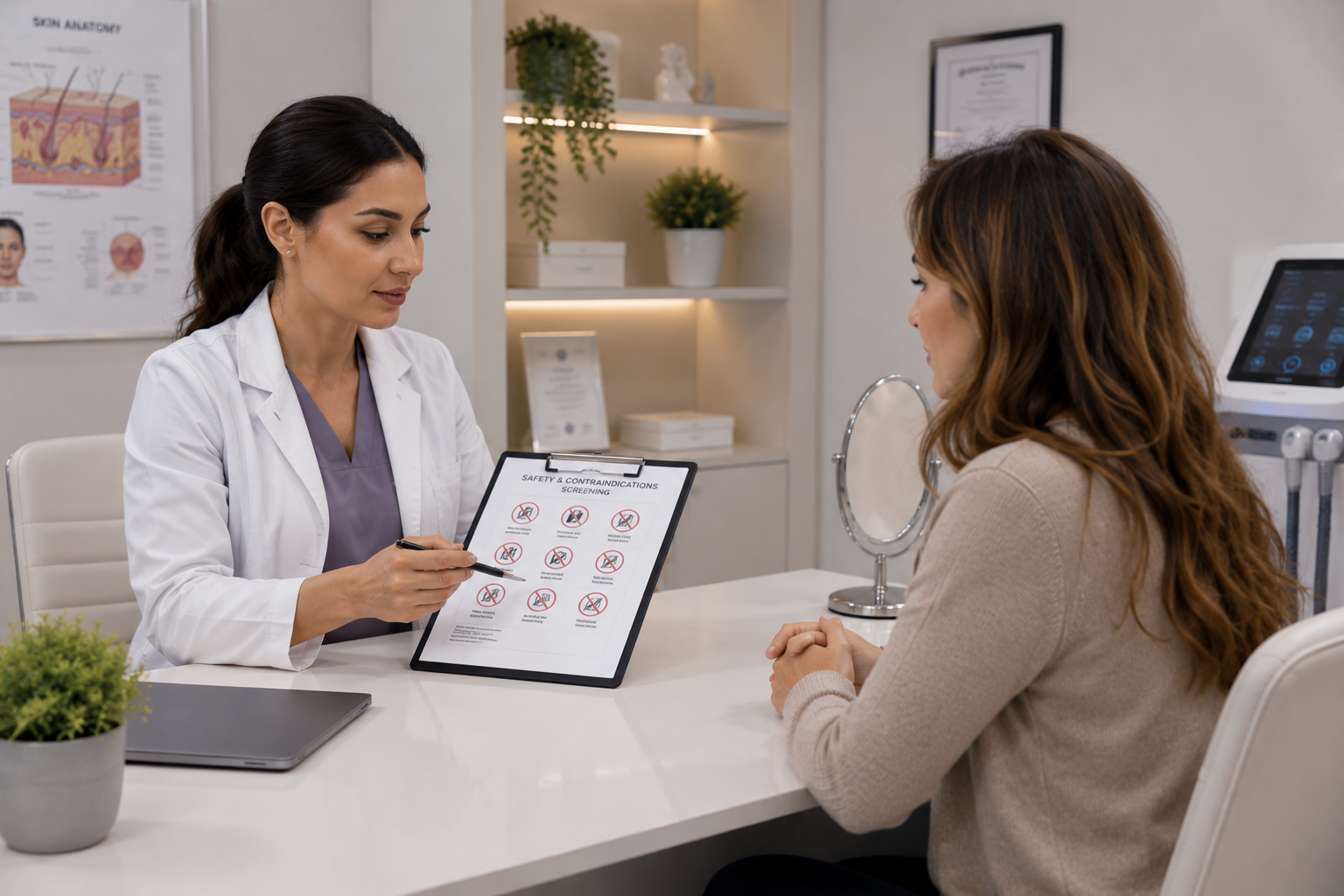
Each technology carries its own exclusions, and they are not interchangeable — being unsuitable for one treatment says nothing about another. Pregnancy and breastfeeding preclude every treatment described here, and active infection or skin disease in the intended area excludes the skin and blemish treatments. Where there is doubt about a skin lesion, cosmetic removal is inappropriate until it has been assessed medically.
Technology-Specific Exclusions
- Cold-based treatment. Raynaud's phenomenon, cold urticaria and cryoglobulinemia rule out fat freezing, as do a hernia near the site, excessively loose skin or too little fat in the target area. For CryoPen, certain circulatory issues, uncontrolled diabetes and a tendency to keloid scarring are exclusions.
- Electromagnetic treatment. Metal implants, an intrauterine device or coil, bleeding disorders, cardiac conditions, epilepsy, active malignancy, hernia, active soft tissue injury and age under eighteen rule out body toning.
- Radiofrequency treatment. Pacemakers and other electronic implants rule out advanced RF microneedling and the Signature Skin Lift, as does recent aesthetic treatment in the same area.
- Injectable treatment. Diabetes mellitus, liver or kidney problems, active skin conditions at the site, and anticoagulant medication such as warfarin all rule out fat dissolving injections.
Expected Effects Versus Complications
Redness, swelling, tenderness, bruising, temporary numbness and scabbing after cryotherapy are expected consequences of treatments that work by provoking a healing response. Genuine complications are rarer: paradoxical adipose hyperplasia, persistent pigmentation change, cold injury after cryolipolysis, or crusting and grid-marking after microneedling. Knowing which category an effect falls into removes unnecessary worry, and anything persisting beyond the expected window should be reported.
Aftercare Across the Treatment Range
Most of these treatments initiate a biological process that continues for weeks, so what happens in those weeks shapes the result as much as the session.
After Fat Reduction
Following cryolipolysis, normal activity resumes the same day, though tingling and tenderness may persist for days to a week. After fat dissolving injections, expect twenty-four to seventy-two hours of downtime, with swelling and bruising settling over two to four weeks. Both rely on lymphatic clearance, so hydration and activity support the process.
After Muscle and Pelvic Floor Work
Body toning and pelvic floor treatment require no recovery, and normal activities resume immediately. Body toning sessions must be spaced at least two days apart. For pelvic floor work, adequate fluid intake before and after the session is the main instruction.
After Skin Treatments
Following RF microneedling or the Signature Skin Lift, redness, swelling and pinpoint marks may last one to five days. Use gentle skincare, avoid harsh sun, apply SPF, and follow clinician guidance before reintroducing makeup and active products. HIFU needs little beyond gentle handling and sun protection.
After Cryotherapy and Intimate Treatment
Following CryoPen, allow the scab or blister to separate naturally, keep the area clean and protected from sun, and attend the four-week follow-up where recommended. After vaginal tightening, refrain from sexual activity for twenty-four to forty-eight hours or as directed.
Frequently Asked Questions
Your Consultation Starts Here
Choosing the right treatment starts with understanding your concern, your medical history and the result you hope to achieve. During your consultation, a trained practitioner will discuss your options, explain what each treatment can and cannot do, and recommend a plan based on your individual needs. Our approach is always honest, personalised and focused on safe, realistic outcomes.